Sweeter Than Honey SVG
First Impressions: Charm That Feels Hand-Drawn, Not Stock
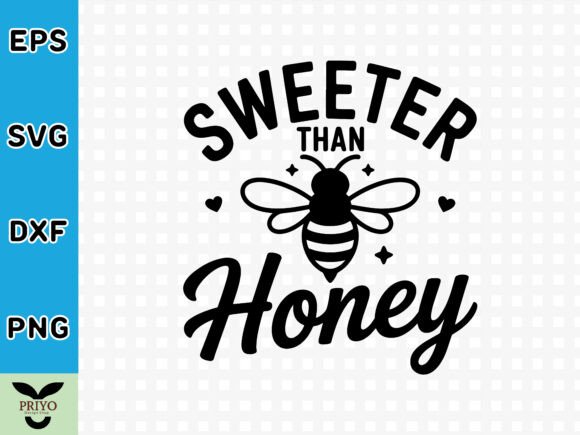
Opening Sweeter Than Honey SVG for the first time, I didn’t see a generic “cute” script—it felt like a quiet, confident whisper of warmth. The lettering leans slightly organic, with soft curves and subtle variation in stroke weight—not overly scripted, not stiffly geometric. There’s a gentle honeycomb motif tucked into the “O” and a tiny bee nestled near the “Y,” but it’s understated enough to avoid visual clutter. This isn’t a design shouting for attention; it’s one that invites a second look, then a smile. It reads as handmade, even before stitching begins—exactly what crafters and Etsy sellers need when building brand trust through authenticity.
A Real Project Test: Embroidering a Linen Kitchen Towel for a Local Boutique
Last week, I prepped Sweeter Than Honey SVG for a custom linen tea towel order from a small-town kitchen boutique. Their customers love heirloom-quality, giftable textiles—no mass-produced vibes allowed. I resized the design to fit a 4x4 hoop (centered just below the towel’s top hem), chose matte cotton thread in warm amber and cream, and layered medium-weight tear-away stabilizer underneath. What stood out immediately was how gracefully the curves translated to stitch: no jagged edges, no awkward pull on the fabric grain. The satin-stitched outlines held clean definition, while the fill stitches settled smoothly into the natural texture of the linen—no puffing or shadowing. Customers later told the shop owner it looked “like something their grandma might’ve stitched,” which, coming from a discerning handmade audience, is high praise.
Where It Shines—and Where It Asks for Thoughtful Handling
Sweeter Than Honey SVG works beautifully across several real-world embroidery contexts:
- Custom apparel: On midweight cotton sweatshirts and structured tote bags, its balanced proportions prevent distortion—even after multiple washes.
- Baby embroidery: Its gentle theme and open letter spacing make it ideal for onesies and burp cloths, especially when paired with soft pastel threads and lightweight cut-away stabilizer.
- Holiday and wedding gifts: Think embroidered pillow covers for bridal showers or linen napkins for honey-themed weddings—it adds sweetness without saccharine overload.
- Small shop product: As a boutique branding element (e.g., stitched onto aprons or market totes), it reinforces warmth and care—key emotional cues for local shoppers.
But it’s not universally frictionless. On stretchy knits like jersey tees, I recommend testing stitch density first—the delicate curves can blur if the fill is too dense or the stabilizer too light. On dark fabrics, the fine interior details (like the bee’s wing line) may soften unless you increase contrast with brighter thread or add a subtle underlay stitch. And on curved surfaces—like the front panel of a dad cap—resize thoughtfully: shrinking too far risks losing legibility in the “S” and “H” terminals.
What It Does for Your Craft Business—Beyond Just Looks
As an embroidery designer who also consults with Etsy sellers and small shop owners, I pay close attention to how a design affects perceived value—and Sweeter Than Honey SVG quietly elevates it. Its restrained elegance signals intentionality. When stitched cleanly, it tells customers, “This wasn’t rushed. This was chosen.” That matters for personalized gifts, where emotional resonance drives repeat orders. It also supports brand consistency: whether used on a patch, a tea towel, or a digital printable mockup, the design retains its voice. No jarring shifts in tone or scale. For craft business owners building cohesive collections, that reliability is gold.
Practical Designer Notes Before You Stitch
- Always test on scrap fabric first—especially if pairing with textured weaves (burlap, terry cloth) or blends (cotton-poly).
- Check thread color contrast early. Light amber on oatmeal linen? Gorgeous. Same thread on charcoal grey? May vanish—try a warm taupe or golden beige instead.
- Review stitch density in your embroidery software. If fill areas feel heavy, reduce density by 5–8% for breathable fabrics like baby cotton or rayon-blend towels.
- Confirm hoop size compatibility. While scalable, extremely tight curves lose fidelity below ~2.5 inches wide—so verify minimum recommended size before digitizing for patches or caps.
- Inspect small details at 200% zoom: the bee’s antenna, the inner edge of the honeycomb cell—these define charm and must translate cleanly.
- Test black-and-white mockups to assess silhouette strength. A strong outline ensures recognition even in low-res listings or printed tags.
- Use proper stabilizer: medium tear-away for stable wovens, cut-away for knits, and water-soluble for sheer layers like organza baby blankets.
- Verify licensing terms before selling finished items or bundling Sweeter Than Honey SVG as part of a digital embroidery file pack—especially for commercial embroidery or Etsy digital product shops.
Final Thought: A Design That Earns Its Place
Sweeter Than Honey SVG doesn’t try to be everything. It’s not bold enough for stadium merch, nor intricate enough for heirloom lace replication. But within its lane—thoughtful, warm, hand-crafted storytelling for Crafts and Graphics—it delivers with quiet confidence. Whether you’re stitching a single personalized gift or scaling production for a seasonal batch of nursery decor, this design holds up. It feels considered, not copied. Human, not algorithmic. And in a market flooded with generic SVGs, that distinction isn’t just nice—it’s commercially essential. Use it with intention, test with care, and let its gentle sweetness do the rest.