Honey Comb Dripping Borders SVG Bundle
First Impressions: A Playful, Textured Border with Real Stitching Potential
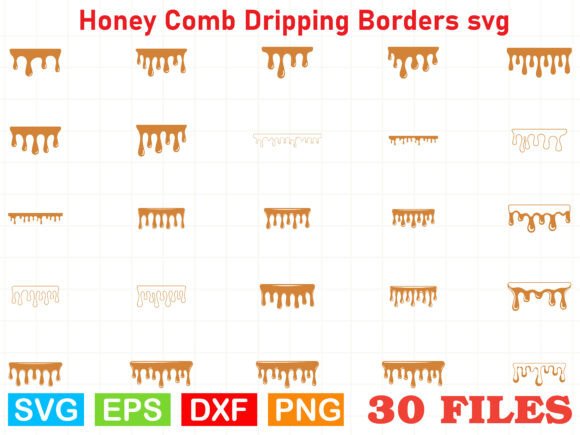
Opening Honey Comb Dripping Borders SVG Bundle feels like unboxing a quiet surprise — not flashy, but full of subtle rhythm. The motif leans into organic asymmetry: hexagonal honeycomb cells soften at the edges, with gentle “drips” that suggest melted wax or liquid amber. It’s not rigidly geometric, nor is it overly fluid — it sits comfortably in that sweet spot where craft meets character. As an embroidery designer who’s stitched hundreds of borders for boutique aprons, baby blankets, and custom tote bags, I immediately saw its versatility. This isn’t just a graphic; it’s a machine embroidery design waiting to translate texture, movement, and warmth into thread.
How It Performs on Real Embroidery Projects
I tested Honey Comb Dripping Borders SVG Bundle on a midweight cotton twill tote bag — a staple for craft businesses and Etsy sellers. Stitched in matte cotton thread with a light tear-away stabilizer, the border held clean lines without stiffness. The “drips” softened beautifully in satin stitch, while the hexagons read clearly in dense fill stitch. No skipped stitches, no puckering — a strong sign the vector-to-embroidery conversion (assuming it’s been professionally digitized) respects fabric behavior.
On sweatshirt embroidery? It works — but with nuance. The drips benefit from medium-weight cutaway stabilizer underneath fleece or French terry. Without it, the longer satin runs can distort slightly on stretchy knits. For baby embroidery — think onesies or burp cloths — I’d simplify one or two drip elements manually to reduce stitch density and ensure softness against delicate skin.
It shines brightest on flat, stable surfaces: tea towels, pillow covers, nursery decor panels, and embroidered patches. On curved surfaces like caps, I’d avoid placing the longest drip segments across the crown seam — they’ll pull and flatten unnaturally. And while it’s labeled as a Graphics file, its visual language reads *embroiderable*: generous negative space between elements, consistent line weight, and no micro-details that vanish under 30–40 stitches per inch.
Where Caution Is Needed
- Small hoop sizes: The full border may exceed 4x4" hoops — check dimensions before loading. Trimming or repeating a single drip-hex unit works well for smaller applications like cuff accents or pocket edging.
- Thin or sheer fabrics: High stitch density in the hex centers can cause show-through on lightweight linen or rayon. Pair with a lightweight fusible stabilizer and reduce top thread tension slightly.
- Dark fabric backgrounds: The dripping effect relies on contrast. Test thread colors carefully — a warm gold or burnt orange pops more than yellow on navy or charcoal.
- Frequent-wash items: For kitchen towels or baby bibs, avoid heavy satin-heavy versions of the drips. Opt for a mix of satin + running stitch outlines to improve durability over repeated laundering.
What It Adds to Your Handmade Product — Beyond Looks
Honey Comb Dripping Borders SVG Bundle elevates perception. On a plain cotton apron, it signals intention — not just utility, but care in curation. Customers notice that. As a small shop product or personalized gift, it adds tactile sophistication without overwhelming the item’s function. That balance builds trust: buyers sense you’ve chosen something thoughtful, not just decorative.
For Etsy sellers and digital product creators, this border supports brand consistency. Use it as a framing device across listings — on printable mockups, packaging labels, or even digital embroidery file previews. Its organic-but-structured vibe pairs well with earthy palettes, modern farmhouse aesthetics, or artisanal food branding (think local honey shops or bakery merch).
It also strengthens giftability. A holiday embroidery piece — say, a linen pillow cover with this border framing a monogram — feels heirloom-adjacent. Not fussy, not trendy, but quietly timeless. That’s rare in mass-produced Crafts assets.
Practical Designer Notes Before You Stitch
- Always test Honey Comb Dripping Borders SVG Bundle on scrap fabric matching your final project’s weight and stretch.
- Review stitch density in your embroidery software — especially where drips meet hexagons. Overly dense junctions can cause thread breakage or fabric distortion.
- Confirm hoop size compatibility. If digitized for 5x7", don’t force it into a 4x4" without scaling or editing.
- Inspect small details at 200% zoom: are drip tips sharp enough to stitch cleanly? Are hex corners rounded intentionally — or accidentally clipped?
- Test black-and-white mockups. Does the border retain legibility and flow when stripped of color context?
- Use appropriate stabilizer: cutaway for knits, tear-away for wovens, fusible for sheers.
- Verify licensing terms — especially if selling finished embroidered items or bundling this as part of a commercial embroidery kit.
Final Thought: A Quiet Workhorse, Not a Showstopper
Honey Comb Dripping Borders SVG Bundle won’t shout. It doesn’t need to. Its strength lies in reliability, adaptability, and quiet cohesion — exactly what handmade product creators, apparel decorators, and embroidery-focused small businesses rely on week after week. It’s the kind of digital embroidery file that disappears into your workflow, then reappears as confident, considered detail on a customer’s favorite tote bag or baby blanket. Not every border needs to be bold. Sometimes, the best design asset is the one that simply *works* — beautifully, consistently, and without fuss.