Vacay Mode on SVG
First Impressions: Light, Lighthearted, and Ready for Real Stitching
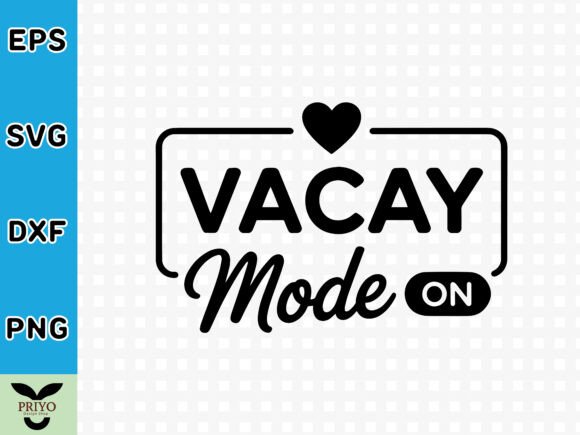
When I opened Vacay Mode on SVG for the first time, I didn’t see just another beach-themed graphic—I saw a design with rhythm. The lettering leans slightly right, like it’s catching a breeze; the “o” in “Vacay” doubles as a sun, clean and uncluttered. It’s not overly detailed, but it’s intentional—no tiny florals or micro-shading that would vanish under thread. That tells me this was built for translation, not just screen display. As a designer who stitches daily for clients and my own craft business, I immediately pictured it on a linen tea towel for a boutique kitchen line—or stitched simply on a cotton tote for a local farmers’ market stall.
A Real Project Test: Embroidering It on a Canvas Tote Bag
Last week, I prepped Vacay Mode on SVG for a custom embroidered tote bag order—light natural canvas, medium-weight, no stretch. I hooped it with tear-away stabilizer (lightweight cutaway would’ve been overkill), set my machine to standard satin stitch for outlines and gentle fill stitch for solid areas, and ran a test on scrap. What stood out? The letter spacing held up beautifully—no crowding, no floating stems. The sun motif stayed crisp without requiring extra underlay. Customers notice that subtlety: when lettering reads cleanly at 3 inches wide, it feels handmade *and* professional—not rushed or pixelated. That’s critical for Etsy sellers and small shop owners who rely on perceived quality to justify pricing.
Where It Shines—and Where It Needs Thought
Vacay Mode on SVG works especially well for sweatshirt embroidery, baby onesies, and pillow covers—applications where legibility and cheerful tone matter more than photorealism. On a soft fleece blanket? Yes—if you reduce density slightly and add light topping stabilizer. On a curved cap front? Proceed with caution: the slight slant of the text means centering matters more than usual, and you’ll want to verify hoop clearance before stitching. For holiday embroidery or wedding gifts (think “Vacay Mode” on a beach-themed bridal party towel), it adds instant personality without feeling kitschy.
But here’s what I’d flag for fellow designers: avoid using Vacay Mode on SVG on thin jersey or highly textured terry cloth without testing. The open counter spaces (like inside the “a” and “o”) can trap lint or distort if stabilizer isn’t matched precisely to fabric weight. And while it’s versatile across Crafts and Graphics use cases, remember—it’s a digital embroidery file first, not a print-ready vector. If you’re adapting it for mug designs or posters, simplify stitch-based shadows or gradients manually; they rarely translate cleanly from embroidery-native geometry.
Stitching Clarity = Customer Trust
In my experience, buyers don’t read license terms—they *feel* authenticity. When Vacay Mode on SVG stitches cleanly on a linen apron for a café owner’s staff gift, it reinforces their brand as thoughtful and polished. When it holds up after three rounds of washing on a child’s embroidered beach towel? That builds repeat orders. But that only happens if you respect the design’s natural limits. Over-stabilizing hides texture; under-stabilizing blurs edges. I always check thread color contrast early—especially on dark fabric. A warm coral thread pops against navy canvas, but the same thread fades on charcoal heather. Test it in black-and-white mockups too. If it loses shape in grayscale, it’ll struggle in low-light retail settings or flat-lay photos.
Practical Notes Every Embroidery Designer Should Keep Handy
- Always stitch a test on scrap fabric matching your final product’s weight and weave—especially for custom apparel or personalized gifts.
- Review stitch density before scaling. Enlarging Vacay Mode on SVG beyond 4.5 inches may require reducing fill stitch % to prevent puckering on lightweight cotton.
- Confirm hoop size compatibility. Its clean horizontal layout fits comfortably in a 4x4 hoop at standard size—but double-check if you plan to add borders or monograms nearby.
- Inspect small details at actual stitch scale: the sun’s rays are subtle, not fragile—good for baby embroidery—but still benefit from smooth thread transitions.
- Use proper stabilizer for your fabric type: tear-away for stable wovens, cutaway for knits, topping for napped fabrics like towels.
- Verify licensing before listing finished products on Etsy or bundling Vacay Mode on SVG as part of a commercial embroidery kit. The listing says it’s ideal for many tasks—but confirm whether resale of stitched items or digital redistribution is permitted.
Final Thought: Not Just a Graphic—A Craft Business Asset
Vacay Mode on SVG isn’t flashy, and it shouldn’t be. Its strength is reliability—the kind that lets you confidently offer “custom vacation-themed embroidery” as a seasonal service, or add it to your best-selling tote bag listing without redesigning mockups every time. For creative entrepreneurs building a recognizable style, it slots neatly into branding that’s upbeat but grounded: think coastal cottagecore, not neon pool party. It pairs well with simple botanical motifs or minimalist anchors—not competing, complementing. And because it avoids trend-heavy elements (no palm trees dripping glitter, no dated fonts), it stays fresh across seasons and customer age groups.
If you’re evaluating Vacay Mode on SVG for your next batch of embroidered patches, holiday gifts, or small shop merchandise, ask yourself: does it look like something a real person would choose to keep, wear, or gift? In my studio—and on the shelves of the boutiques I consult for—the answer has been yes. Not because it’s perfect, but because it’s purpose-built: clear, adaptable, and quietly confident. That’s the mark of a design that earns its place in your embroidery project queue.