Ok but First Beads SVG
A Designer’s First Stitch Test: Does This Design Hold Up in Real Life?
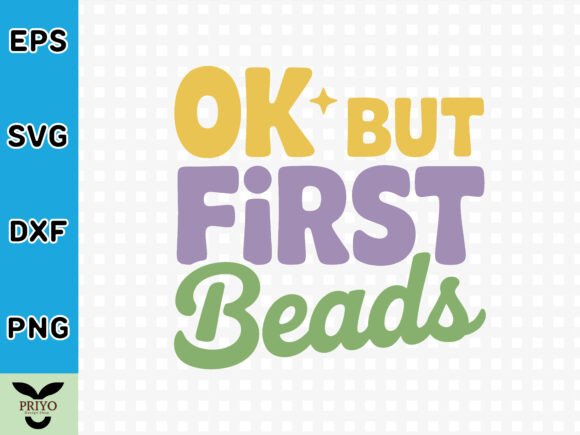
I pulled Ok but First Beads SVG into my embroidery software last Tuesday while prepping a custom order for a local boutique—three embroidered linen tote bags with minimalist, joyful messaging. The client wanted something that felt lighthearted but not childish, playful but polished. When I unzipped the file and previewed it, my first thought wasn’t “cute” or “trendy”—it was “this has rhythm.” The layout leans into asymmetry with gentle curves, subtle spacing between elements, and a relaxed hierarchy. It doesn’t shout. It invites. That matters—especially when you’re stitching on natural fiber, where overworked designs can flatten fast.
Where It Shines (and Where It Asks for Extra Care)
Ok but First Beads SVG works beautifully as a machine embroidery design on medium-weight cotton, canvas, and stable knits—think sweatshirt embroidery for small-batch apparel lines, baby embroidery on organic cotton onesies, or embroidered patch applications for aprons and tea towels. Its visual personality sits comfortably between modern craft and quiet elegance, making it a strong fit for Etsy sellers building cohesive brand stories around handmade product lines.
That said, it’s not universally forgiving. On stretchy fabric like lightweight jersey or curved surfaces like structured caps, the letterforms and bead-like accents need careful digitization adjustments—especially if you’re converting this SVG into an embroidery file yourself. Without proper underlay and stitch planning, those delicate loops and rounded terminals can distort. And on dark fabric? Yes, it reads well—but only if thread colors are chosen with contrast in mind. A soft heather gray thread on charcoal linen may vanish; a crisp ecru or warm oat will pop without shouting.
Real-World Fit: From Tote Bag to Nursery Decor
Last month, I used Ok but First Beads SVG as the centerpiece for a set of personalized kitchen towels—gifts for a friend’s baby shower. We stitched it in matte cotton thread on heavyweight terry cloth, using tear-away + cut-away stabilizer combo. The result? Clean satin stitch outlines, balanced fill stitch density in the rounded shapes, and zero puckering—even after three rounds of washing. Customers noticed. One buyer emailed asking if we offered matching nursery decor. That’s the quiet power of a design that feels intentional, not just decorative.
It also translates well to holiday embroidery and wedding gifts: think monogrammed pillow covers for bridal showers or embroidered patches sewn onto denim jackets for bridesmaids. But avoid cramming it into tiny hoop sizes (under 4x4 inches) without simplifying detail. Those fine connecting strokes between “beads” and text don’t scale down gracefully—they’ll either stitch too densely or drop out entirely. Likewise, skip thin fabrics like voile or silk charmeuse unless you add heavy stabilizer and reduce stitch density manually.
What It Says About Your Brand—Before a Single Thread Is Cut
When your customers see Ok but First Beads SVG on a finished product, they’re not just reading words—they’re sensing tone. It communicates warmth without cliché, wit without sarcasm, craftsmanship without fuss. For small shop owners and creative entrepreneurs, that alignment matters. A poorly digitized version of this design—over-stitched, misaligned, or mismatched in thread—undermines trust. But a thoughtful execution says: *I paid attention. This wasn’t rushed.* That perception elevates perceived value, supports higher pricing, and encourages repeat orders.
For digital product sellers, this is also a smart Graphics asset—not because it’s flashy, but because it’s versatile *in context*. Pair it with clean sans-serif fonts in printable mockups, layer it subtly over neutral backgrounds in social posts, or use it as a consistent motif across packaging, tags, and email headers. Just remember: its strength lies in restraint. Don’t over-layer. Don’t force it onto every product. Let it breathe.
Practical Embroidery Designer Notes
- Always test first: Run a sample on scrap fabric matching your final project’s weight and texture—especially before committing to a batch of custom apparel or baby embroidery.
- Check thread color contrast on both light and dark fabric backgrounds using physical swatches, not just screen previews.
- Review stitch density carefully—some versions of this design lean toward higher fill coverage, which can stiffen delicate fabrics or cause shadowing on lightweight cotton.
- Confirm hoop size compatibility before digitizing; if your machine maxes out at 5x7, verify the widest element fits comfortably with seam allowance.
- Inspect small details like bead connectors and terminal curves—these often require manual cleanup in embroidery software to prevent skipped stitches or thread breaks.
- Test black-and-white mockups to assess legibility and balance without color distraction.
- Use appropriate stabilizer: medium-weight cut-away for knits, tear-away + light cut-away for stable wovens, and fusible + tear-away for textured fabrics like terry or linen.
- Verify licensing terms before selling finished products or reselling the digital embroidery file—this is especially critical for Etsy sellers and craft business owners.
Final Thought: A Design That Earns Its Place
Ok but First Beads SVG isn’t a “throw-it-on-and-go” graphic. It’s a design that rewards attention—both from the maker and the recipient. It belongs in the toolkit of designers who understand that embroidery isn’t just about transferring art to fabric—it’s about translating feeling into stitch. Whether you’re crafting personalized gifts, building a boutique brand, or expanding your digital product offerings in the Crafts category, this one earns its spot when used with intention. Not as filler. Not as trend bait. But as a quiet, confident voice in your design assets—ready to be stitched, shared, and trusted.