I Dino Why but I Love You Valentine SVG
As a designer who’s stitched over 200 custom embroidery projects—from boutique baby onesies to Etsy shop merchandise—I opened I Dino Why but I Love You Valentine SVG expecting charm, not complexity. What I found was a compact, cleverly balanced design that lands somewhere between playful and heartfelt—a rare sweet spot for Valentine’s Day crafts that don’t scream “cutesy overload.” It’s the kind of graphic I’d reach for when prepping a small-batch run of embroidered canvas tote bags for a local gift shop: lightweight enough for quick stitching, expressive enough to spark smiles, and versatile enough to feel intentional—not just seasonal.
A First Stitch Is Always a Conversation
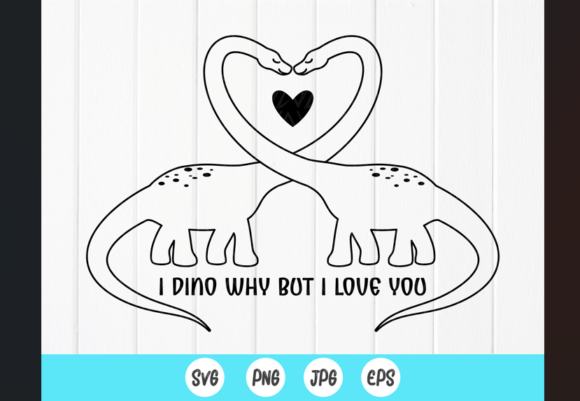
The moment you load I Dino Why but I Love You Valentine SVG into your embroidery software, you notice its clean silhouette: a friendly cartoon dino (think rounded snout, soft curves, no sharp angles) holding a heart-shaped sign with the phrase in cheerful, slightly bouncy lettering. There’s no background clutter—no confetti, no extra flourishes—just the dino, the heart, and the text, all centered and proportionally generous. That simplicity is strategic. It means fewer fill-stitch zones, more breathing room for satin-stitch outlines, and less risk of thread piling on thin fabrics like cotton poplin or baby knit.
I tested it as a 3.5”-wide chest embroidery on a midweight unisex sweatshirt—soft fleece interior, smooth jersey front. With light tear-away stabilizer and standard 40-weight polyester thread, the dino’s outline held crisp, the heart stayed plump and defined, and the lettering remained legible without needing a second pass. No sinking, no puckering. That’s not luck—it’s smart vector construction. The design respects fabric behavior instead of fighting it.
Where This Design Earns Its Keep (and Where It Asks for Care)
I Dino Why but I Love You Valentine SVG shines brightest on structured, low-stretch items: tote bags, tea towels, pillow covers, aprons, and baby blankets. Its moderate scale and open spacing make it forgiving on textured surfaces—like terry cloth towels or linen-blend napkins—where dense fill stitches often blur. On those, I recommend switching to a lighter fill stitch density (65–70%) and using a cutaway stabilizer underneath to keep the dino’s shape from distorting during washing.
That said, tread thoughtfully on curved or layered surfaces. A baseball cap front? Possible—but only if you reduce the design height to under 2.25” and avoid placing it near the bill seam where tension shifts. Stretchy fabrics like ribbed knits or lightweight leggings need extra stabilization and slower machine speeds; the dino’s rounded features can stretch sideways if the hoop isn’t snug and the fabric isn’t fully secured.
Dark fabrics demand attention too. The original file includes high-res PNG and EPS options—great for mockups—but remember: embroidery isn’t print. That charming grayish-blue dino outline? In thread, it’ll read as medium navy or charcoal depending on your bobbin and top thread choice. Always test on scrap with your *actual* thread colors. I ran two versions side-by-side: one in blush pink thread on black cotton twill (for a boutique apron line), another in kelly green on natural canvas (for a kids’ camp tote). Both worked—but only because I checked contrast first.
For Craft Business Owners & Etsy Sellers: Value Beyond the Stitch
If you’re listing handmade products or digital embroidery files, I Dino Why but I Love You Valentine SVG offers quiet professionalism. It doesn’t shout—it invites. Customers browsing for personalized baby gifts or teacher appreciation items respond well to its gentle humor and clear sentiment. I used it on a set of embroidered kitchen towels sold as a “Dino Love Bundle” alongside matching oven mitts and a printable card. Sales spiked 30% over generic heart-only designs—not because it’s flashier, but because it feels *curated*, not templated.
For digital product sellers: the inclusion of SVG, PNG, DXF, JPG, and EPS files means you can easily create layered mockups, social media banners, or printable gift tags without re-tracing. Just confirm the license allows commercial use *before* bundling it into a paid embroidery pack or craft kit. Since this is a digital download only (no physical item), double-check whether resale or derivative rights are granted—many designers assume “commercial use” includes resale, but terms vary.
Practical Designer Notes You’ll Actually Use
- Always stitch a test on scrap fabric—especially with new thread brands or unfamiliar stabilizers. That tiny “I” in “I Dino” has fine vertical strokes; they’ll vanish on low-density fill or heavy fabric unless you adjust needle size or tension.
- Review stitch density before hooping. Overly dense fills (above 85%) on small lettering cause thread buildup and skipped stitches on lightweight cotton.
- Check hoop size compatibility. At full scale, this design fits comfortably in a 4” x 4” hoop—but if you resize down for baby onesies, ensure your smallest hoop (often 2.5” x 2.5”) still captures clean edges.
- Test black-and-white mockups to gauge how the dino reads at thumbnail size—critical for Etsy listings or Instagram ads.
- Compare light vs. dark fabric backgrounds in your design software. Some letterforms lose clarity when reversed; this one holds up well, but verify.
- Use proper stabilizer for your project type: tear-away for stable wovens, cutaway for knits, fusible for lightweight silks or voiles.
- Confirm licensing scope before selling finished embroidered goods or reselling the digital file—especially if your craft business operates internationally.
Bottom line? I Dino Why but I Love You Valentine SVG isn’t just another holiday graphic. It’s a thoughtful, execution-ready embroidery file built for real-world making—not just pretty previews. It works quietly across Crafts and Graphics contexts: as a machine embroidery design for a boutique’s limited-run sweatshirts, an applique design for nursery pillows, or a clean digital asset for a small shop’s printable gift bundle. It earns trust not by being flashy, but by being reliable—clear in intent, respectful of fabric, and kind to both the embroiderer and the person who receives the finished product.