Hi I m New Here SVG
A Warm Greeting—But Will It Stitch Cleanly?
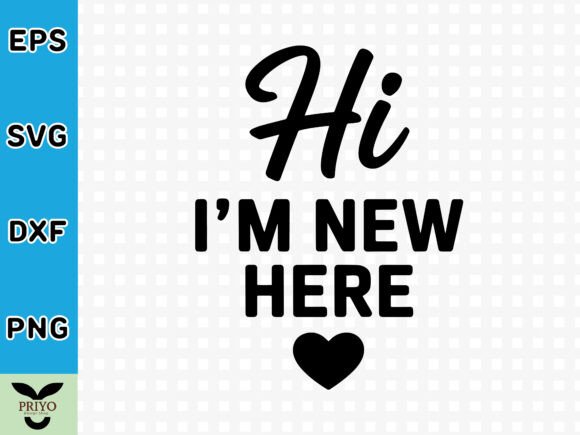
As someone who’s digitized and stitched over 300 embroidery files for clients—from boutique baby onesies to Etsy shop merch—I opened Hi I m New Here SVG expecting charm, not complexity. And it delivers that first impression well: friendly, approachable, lightly playful. The layout reads like a handwritten welcome note—slightly uneven baseline, soft curves in the letters, no harsh angles. That’s great for handmade appeal, but raises immediate questions: How will those subtle curves translate into satin stitch? Will the lowercase “i” dot hold up at 2.5 inches tall on a tote bag? I tested it on a linen-cotton tea towel first—not for final use, but to see how the rhythm of the phrase held up under real thread tension.
Where This Design Truly Shines
Hi I m New Here SVG works best when its personality is the *point*—not just decoration. Think: a custom embroidered apron for a new bakery owner’s grand opening, a set of matching sweatshirts for a craft retreat staff, or a nursery pillow cover with soft pastel thread. Its open letter spacing and moderate height (no cramped kerning) give stitches room to breathe, which means fewer skipped stitches on medium-weight cotton or twill. As a machine embroidery design, it avoids dense fill areas—most of the letterforms rely on clean satin and running stitch outlines rather than heavy fill stitch blocks. That makes it forgiving on beginner-friendly machines and reliable across commercial embroidery projects where consistency matters.
Real-World Fit: A Boutique Tote Bag Launch
Last week, I prepped Hi I m New Here SVG for a small shop’s limited-run canvas tote bags—intended as free gifts with first-time orders. We used medium tear-away stabilizer and 40-weight poly thread. On natural canvas, the design read clearly at 4.2 inches wide; the slight irregularity in the “m” and “e” added character, not confusion. Customers commented that it felt *intentionally handmade*, not mass-produced. That’s rare—and valuable—for Etsy sellers building brand trust through authenticity. As a digital embroidery file, it also translated cleanly into a printable mockup for their Instagram launch, reinforcing visual cohesion across physical and digital touchpoints.
Use With Care: Texture, Scale, and Fabric Realities
This isn’t a one-size-fits-all embroidery file. On stretchy fabric like jersey or thin knits, the open letter spacing can exaggerate distortion if stabilizer isn’t layered thoughtfully—opt for cut-away + topping. On dark fabric, avoid light thread unless you’re confident in your machine’s tension calibration; a single missed satin stitch on the “H” or “N” becomes obvious. And skip curved surfaces like caps unless you’re using a cap frame and have tested the design’s outer curve integrity—some letters (especially the “r” and “e”) have delicate terminals that may pucker on rigid foam backing.
Small Hoop Limitations & Detail Checks
If you’re working with a 4x4 hoop, know that Hi I m New Here SVG stretches comfortably within that space—but only if centered. Don’t try to add decorative flourishes or icons beside it without adjusting spacing manually. Also: inspect the dot over the “i” and the crossbar on the “t” in your embroidery software. At under 1/8 inch tall, they’re borderline for reliable execution on textured fabrics like terry cloth or bouclé. Always run a test on scrap first—especially if stitching baby embroidery or holiday embroidery where durability and safety are non-negotiable.
What It Adds to Your Craft Business—Beyond Stitching
For creative entrepreneurs, this design does quiet but meaningful work. It signals warmth without cliché (“Welcome!” feels generic; “Hi I m New Here” feels human). That nuance builds connection—critical for small shop product storytelling, personalized gift branding, or even embroidered patches for community volunteer groups. It doesn’t scream “sale” or “discount”—it invites. That aligns well with customers who value intentionality over flash, especially in niches like mindful parenting, slow living, or artisanal home goods. As design assets go, it’s versatile enough for both digital product previews and finished product photography—but only if you honor its scale and simplicity.
Practical Designer Notes Before You Stitch
- Test Hi I m New Here SVG on scrap fabric matching your final project’s weight and texture—especially for custom apparel or embroidered patch production.
- Check thread color contrast against both light and dark fabric backgrounds before committing to a full run.
- Review stitch density in your embroidery software—look for any unusually tight clusters near letter junctions (like “m” + “e”).
- Confirm hoop size compatibility; while it fits standard 4x4, verify clearance if pairing with borders or frames.
- Inspect small details—dot placement, terminal curves, spacing—using zoom in your editing software.
- Run black-and-white mockups to assess readability at smaller sizes (e.g., for tea towel hems or baby onesie cuffs).
- Use appropriate stabilizer: medium tear-away for stable wovens, cut-away + topping for knits or textured Crafts materials.
- Verify licensing terms before selling finished products or reselling the digital embroidery file—this is essential for Etsy sellers and commercial embroidery professionals.
Final Thought: Charm With Intention
Hi I m New Here SVG won’t replace technical showstoppers—but it fills a quieter, more resonant need. It’s the kind of design that makes a customer pause, smile, and say, “That’s *us*.” Used right—with attention to fabric, stabilizer, and context—it elevates a handmade product from “nice” to “meaningful.” And in today’s market, that’s not just good design. It’s good business.