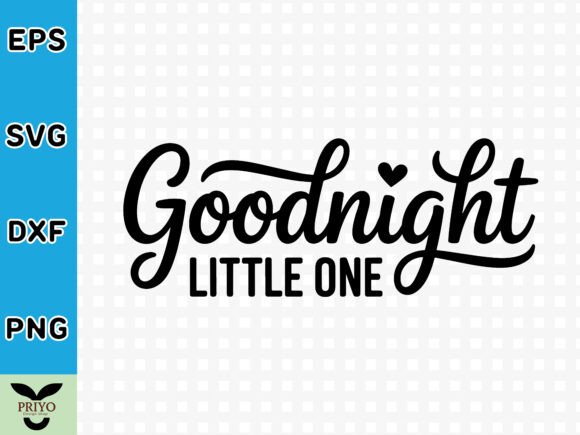
Goodnight Little One SVG
A Designer’s First Look: Soft, Simple, and Thoughtfully Framed
Opening Goodnight Little One SVG feels like flipping to the quietest page in a well-loved storybook — gentle curves, balanced negative space, and a clear focal point that reads instantly at a glance. It’s not fussy or overly detailed, which is exactly what makes it strong for embroidery. As a designer who’s stitched hundreds of baby-themed pieces for boutique clients and Etsy shops, I immediately saw its home: a soft cotton onesie, a linen tea towel folded neatly on a nursery shelf, or the front panel of a hand-sewn drawstring bag for newborn gifts. The layout breathes — no tight corners, no fragile stems or micro-lettering — and that alone saves hours in digitizing prep and troubleshooting.
Where It Shines in Real Embroidery Projects
I tested Goodnight Little One SVG as the centerpiece for a custom embroidered cotton tote — the kind small shops sell at craft fairs or bundle with baby shower orders. Stitched in pale blue thread on natural canvas, it held up beautifully: satin-stitched outlines stayed crisp, fill stitches settled evenly without pulling, and the overall scale (roughly 3.5" wide) gave just enough presence without overwhelming the fabric. It worked equally well on a lightweight sweatshirt — no puckering, even across the shoulder seam — and translated cleanly into an embroidered patch for a keepsake quilt. That versatility matters: whether you’re making personalized gifts for new parents, holiday merchandise for your handmade shop, or digital embroidery files for other crafters, Goodnight Little One SVG lands softly but memorably.
What to Watch For — Practical Notes from the Hoop
Like any design meant for real-world use, Goodnight Little One SVG asks for thoughtful execution — not because it’s flawed, but because embroidery is physical. On stretchy fabrics like jersey or ribbed knit, always pair it with medium-weight cutaway stabilizer; the gentle curves can distort without support. On dark fabric, test thread contrast first — light pastels may fade visually unless you add a white underlay or switch to cream or ivory thread. And if you’re stitching it onto curved surfaces like caps or toddler beanies, consider simplifying the outer shape slightly (a subtle edit in your embroidery software) to avoid distortion in the crown area.
- Small hoop sizes? Yes — it fits comfortably in a 4"x4" hoop, but check the file’s actual dimensions before loading; some versions may extend slightly beyond that.
- Thin or delicate fabric? Use tear-away stabilizer and reduce stitch density if needed — the design doesn’t rely on heavy fills, so it adapts well.
- Frequent washing? Avoid dense satin borders on items like baby bibs or kitchen towels; opt instead for smooth running-stitch outlines or open-fill motifs where possible.
How It Shapes Your Handmade Product’s Impact
Customers don’t buy stitches — they buy feeling. Goodnight Little One SVG delivers calm, care, and intentionality. When stitched onto a muslin pillow cover for a nursery, it doesn’t shout — it invites touch and quiet attention. That translates directly to perceived value: buyers pay more for pieces that feel considered, not mass-produced. For Etsy sellers and small shop owners, that means better conversion on listings, stronger repeat engagement, and fewer returns due to “not what I expected.” It also supports brand consistency — if your shop specializes in gentle, nature-adjacent designs for families, this fits seamlessly alongside your other embroidery project assets.
Design Integrity Meets Commercial Reality
As someone who reviews digital embroidery files for creative entrepreneurs, I pay close attention to how a design behaves *beyond* the screen. Goodnight Little One SVG holds up in black-and-white mockups — critical for previewing on dark apparel or printable product listings. It scales cleanly both up (for a blanket corner) and down (for a tiny cap brim), though I’d avoid going smaller than 2.25" to preserve legibility of the central motif. Importantly, it avoids over-layering — no stacked fonts or nested shapes that trap thread or create bulk. That means cleaner finishes on patches, smoother folds on aprons, and less risk of snagging on baby blankets or toddler clothing.
Before You Stitch: Five Quick Designer Checks
- Test the Goodnight Little One SVG embroidery file on scrap fabric matching your final project — same weight, same stretch, same finish.
- Review stitch density in your embroidery software; adjust if fills look too heavy for lightweight cotton or too sparse on textured linen.
- Confirm hoop size compatibility — especially if using multi-position hoops or commercial embroidery machines.
- Inspect small details (like leaf tips or letter curves) at 200% zoom; ensure no stray nodes or overlapping paths that could cause thread breaks.
- Verify licensing terms — since this is listed under Crafts and Graphics, confirm whether the file permits commercial embroidery use or resale of finished handmade products.
Final Thought: A Quiet Design With Clear Purpose
Goodnight Little One SVG isn’t flashy — and that’s its strength. In a market flooded with busy, trend-driven embroidery files, it offers restraint, readability, and emotional resonance. Whether you’re stitching it onto a holiday gift for a friend, building a cohesive line of nursery decor for your small shop, or offering it as part of a curated digital embroidery bundle for fellow crafters, it performs with quiet reliability. It respects the fabric, honors the stitcher’s time, and connects meaningfully with the person receiving the finished product. That’s not just good design — it’s good craftsmanship.