God Bless This Child SVG
A Designer’s First Look: Soft, Sincere, and Built for Meaning
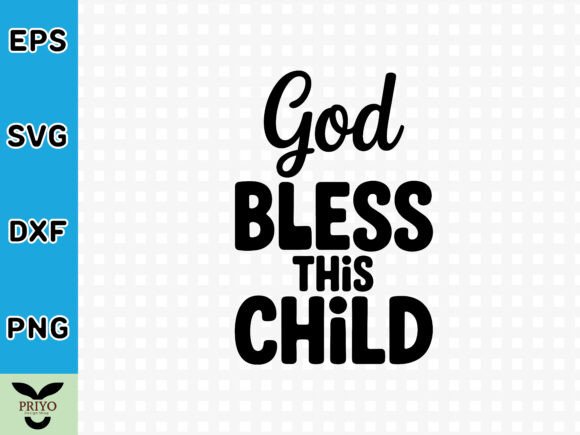
When I opened God Bless This Child SVG in my design software, what struck me first wasn’t technical precision—it was tone. The script flows with gentle curves, the “God Bless” arcing upward like a quiet prayer, while “This Child” rests lower, grounded and tender. It’s not ornate or fussy; it’s warm, reverent, and immediately legible at medium sizes. As a designer who’s stitched hundreds of personalized baby items—from hospital welcome bags to nursery wall hangings—I recognized this as a design that leans into emotional resonance over visual noise. That matters. A lot.
Real-World Test: Embroidering a Keepsake Tote for a New Parent
Last week, I used God Bless This Child SVG on a natural canvas tote—intended as a gift for a friend’s baby shower. I chose a soft ecru linen-cotton blend, medium-weight stabilizer, and pale blue thread for contrast without harshness. The result? Clean satin-stitched lettering with subtle lift, no puckering, and zero skipped stitches—even around the gentle swell of the “G” and the delicate tail of the “y.” It didn’t shout. It settled in, quietly meaningful. Customers notice that difference. When a new parent sees this on a tote holding diapers, blankets, and love notes, it reads as intentional—not mass-produced, not generic. It reads as handmade care.
Where This Design Truly Shines (and Where It Needs Thought)
God Bless This Child SVG excels in projects where sincerity and simplicity carry the weight: baby onesies, cotton tea towels, linen pillow covers, lightweight aprons, and unstructured caps. Its moderate height and open letter spacing hold up beautifully on sweatshirt embroidery—especially mid-chest placement—without overwhelming the garment. As a machine embroidery design, it’s forgiving on textured fabrics like terry cloth or looped cotton, since the stroke width avoids fine hairline details that vanish in nap.
But here’s what I’d tell an Etsy seller or craft business owner before listing it: this isn’t a one-size-fits-all embroidery file. On stretchy knit fabric (think newborn bodysuits), you’ll need cutaway stabilizer—and test stitching is non-negotiable. On dark fabric, avoid light pastel threads unless you’re using underlay; the fill stitch density isn’t ultra-heavy, so contrast relies on smart thread choice. And skip it for tiny hoop applications (under 3” diameter)—the lowercase “i” dot and subtle curve of the “d” lose definition when shrunk below 2.5 inches wide.
What It Adds to Your Finished Product
- Visual appeal: Balanced negative space keeps it airy—not crowded or dated.
- Stitching clarity: No overlapping paths or nested elements, so your machine runs smoothly and thread tension stays consistent.
- Product value: Elevates a plain tote or tea towel from utilitarian to heirloom-ready, especially when paired with thoughtful packaging.
- Customer trust: Feels personal, not templated—critical for boutique branding or custom apparel orders.
- Giftability: Works across ages and occasions: baby showers, baptisms, adoption celebrations, even sympathy gifts for families who’ve lost a child.
Practical Notes Every Embroidery Designer Should Keep Handy
Before you load God Bless This Child SVG into your embroidery machine or add it to your digital product shop, run through these checks:
- Test the design on scrap fabric matching your final project’s weight and stretch.
- Review thread color contrast on both light and dark backgrounds—try it in black and white mockups to assess readability.
- Confirm your hoop size fits comfortably with breathing room; don’t force it into a tight frame.
- Inspect small details at 200% zoom: are corners smooth? Is the “t” crossbar fully connected? Does the “c” close cleanly?
- Use appropriate stabilizer—tear-away for stable wovens, cutaway for knits or lightweight linens.
- If selling finished embroidered items or digital embroidery files, verify licensing terms directly with the seller. “Crafts” and “Graphics” categories don’t automatically grant commercial rights—always double-check.
Beyond the Stitch: Why This Design Fits Real Creative Workflows
This isn’t just another religious phrase in a font. God Bless This Child SVG has rhythm. It breathes. That makes it unusually versatile for creative entrepreneurs: it adapts to printable mockups for Etsy listings, works as a clean centerpiece for nursery decor bundles, and layers well with simple floral motifs or minimalist borders if you’re building a cohesive collection. As a digital embroidery file, it’s also low-risk for beginners—no complex applique design steps, no dense fill stitch clusters that cause thread breaks. But it still feels considered, not basic.
I’ve seen too many craft businesses dilute their brand with overused, clip-art-style phrases. This one avoids that trap. It doesn’t try to be everything—it’s specific, gentle, and human. That specificity builds recognition. Repeat buyers remember the warmth, not just the words. And for small shop owners stitching holiday embroidery or personalized gifts during peak season? That consistency—across baby embroidery, sweatshirt embroidery, and embroidered patch variations—builds quiet professionalism.
Final Thought: Intention Over Inventory
As someone who evaluates dozens of embroidery files each month, I don’t reach for God Bless This Child SVG because it’s trendy or technically flashy. I reach for it when the project asks for reverence, not decoration. When the client wants something that feels held—not hurried. Whether you’re an Etsy seller curating a line of baptism gifts, a church group making keepsake blankets, or a solo maker embroidering kitchen towels for local boutiques, this design earns its place by doing one thing well: honoring the quiet gravity of childhood, stitch by careful stitch.