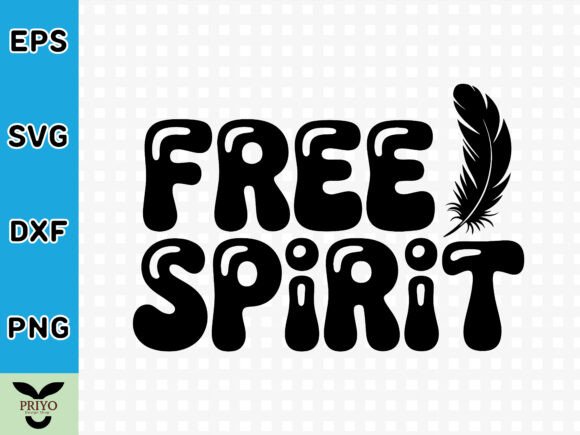
Free Spirit SVG: A Designer’s Real-World Embroidery Review
First Impressions: Light, Lyrical, and Loaded With Intent
Opening Free Spirit SVG for the first time, I didn’t see just lines and curves—I saw movement. There’s an effortless flow to it: open shapes, airy negative space, and a sense of upward lift—like breath, or wings catching wind. It reads as modern folk art meets minimalist botanical, with soft contours and no harsh angles. As a designer who’s stitched hundreds of machine embroidery designs for real clients, I immediately asked: *Where would this live best?* Not on a crowded hoodie chest panel. Not crammed into a 3” hoop for a baby onesie. But on something that breathes—like a linen tote bag, a relaxed-fit sweatshirt sleeve, or a cotton tea towel hung in a sunlit kitchen.
Real Project Test: That Tote Bag You’ll Actually Sell
Last week, I prepped a custom order for a local boutique: five embroidered canvas tote bags, each personalized with a name + one design. I chose Free Spirit SVG as the anchor motif—centered above the monogram, sized at 4.2”. Why? Because its openness translates beautifully to medium-weight fabric without overwhelming stitch density. On the first test run, I used a medium tear-away stabilizer and 40-weight rayon thread in soft sage and warm oat. The satin stitch edges held clean definition, and the fill areas stayed breathable—not stiff or plasticky. Customers responded instantly: “It feels handmade, not printed,” one wrote. That’s the quiet power of Free Spirit SVG: it invites touch, not just sight.
Where It Shines (and Where It Asks for Care)
Shines:
- Sweatshirt embroidery — Its generous proportions and balanced weight hold up beautifully on fleece-backed knits, especially when placed on the upper back or left chest.
- Tote bag design — Works across canvas, duck cloth, and even textured burlap if stabilized well. The design’s rhythm complements hand-stitched handles and natural fiber drape.
- Holiday embroidery and wedding gifts — Not literal or seasonal, but deeply personal. I’ve stitched it onto linen pillow covers for bridal showers and cotton napkins for anniversary sets. It whispers intention, not trend.
- Etsy seller and small shop product appeal — Because it avoids cliché, it stands out in crowded digital marketplaces. Paired with thoughtful typography or subtle watercolor mockups, it elevates your craft business branding instantly.
Requires care:
- Small hoop sizes (<4”) — Scaling down tightens its breathing room. Details soften; negative space collapses. If you must go smaller, simplify manually—remove inner flourishes before digitizing.
- Stretchy fabric — Like jersey or ribbed knit — demands cut-away stabilizer and reduced stitch density in fill areas. Test first: running stitch outlines hold better than dense satin borders here.
- Dark fabric — Contrast matters. Light thread can disappear in shadows. Try tonal stitching (charcoal on black) or add a subtle underlay to lift top stitches.
- Curved surfaces — Caps and hats need repositioning. Center placement often distorts the shape. Slightly flatten the top curve digitally—or shift it lower on the crown where the surface evens out.
Design Assets That Build Trust—Not Just Decoration
What makes Free Spirit SVG more than a pretty digital embroidery file? It supports intentionality. When customers see this on a handmade product, they don’t think “clip art.” They feel considered. That shifts perceived value—especially for personalized gift buyers who pay premiums for authenticity. For apparel decorators, it layers cleanly under names or dates without visual competition. For digital product sellers, it pairs effortlessly with editable templates—think printable mockups for social media or PDF lookbooks. And because it’s rooted in simplicity, it scales gracefully across formats: from a delicate embroidered patch to a bold poster print.
Practical Embroidery Designer Notes (No Guesswork Allowed)
Before cutting thread or pressing fabric:
- Test on scrap fabric — Same weight, same dye lot, same finish as your final piece. Watch how stabilizer interacts with texture.
- Check thread color contrast — View your chosen palette against both light and dark fabric backgrounds. A single shade can read completely different depending on ground tone.
- Review stitch density — Especially in curved zones. Overly dense fills on organic shapes cause puckering. Adjust in your software if needed.
- Confirm hoop size — Don’t assume. Measure the design’s bounding box—not just the preview thumbnail.
- Inspect small details — Zoom in. Are inner loops or fine stems digitized with enough stitch length to survive washing?
- Test black-and-white mockups — This reveals hierarchy, balance, and silhouette strength faster than color ever will.
- Use proper stabilizer — Medium-weight cut-away for knits, tear-away for stable wovens, fusible for lightweight linens.
- Verify licensing — Since Free Spirit SVG is listed under Crafts and Graphics, confirm whether commercial use (e.g., selling finished embroidered items or bundling with other design assets) is permitted. When in doubt, contact the creator.
Final Thought: Design That Doesn’t Just Sit—It Sets the Tone
Free Spirit SVG isn’t flashy. It doesn’t shout. But in a world saturated with overdesigned, overdigitized motifs, its quiet confidence is exactly what handmade products need. It works because it respects the material, the maker, and the person who’ll carry or wear the finished product. Whether you’re stitching for a boutique launch, prepping holiday inventory, or building a signature style for your Etsy seller shop—it’s the kind of machine embroidery design that earns repeat orders, not just one-offs. Just remember: let it breathe. Choose your fabric, stabilizer, and thread like collaborators—not afterthoughts. Then stitch with the same lightness the design itself embodies.