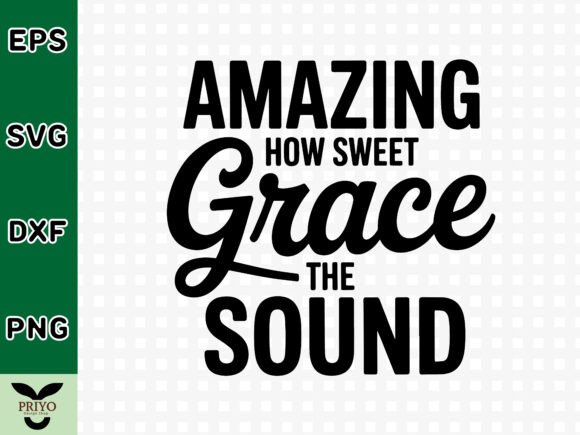
Amazing Grace How Sweet the Sound SVG
A Quiet Moment Before the Needle Moves
When I first opened Amazing Grace How Sweet the Sound SVG, I didn’t reach for my embroidery machine—I paused. There’s something about this design that lands softly: clean lines, balanced spacing, and a reverence in its rhythm. It doesn’t shout. It breathes. As a designer who’s stitched hundreds of faith-based motifs for boutique clients, Etsy sellers, and custom gift shops, I know how easily sentiment can tip into cliché. This one doesn’t. The lettering flows with gentle curves—not overly ornate, not stripped bare—and the overall shape sits comfortably within a vertical rectangle, making it intuitive to center on a tote bag, pillow cover, or baby onesie.
Where It Lives Best: Real Projects, Real Reactions
Last week, I used Amazing Grace How Sweet the Sound SVG as the focal point for a linen tea towel set destined for a local craft fair. Not as a print—but as an embroidered monogram-style accent above a hand-stitched border. Customers paused. Several said, “That feels like something my grandmother would’ve hung in her kitchen.” That’s the quiet power here: it reads as handmade, intentional, and emotionally resonant—not mass-produced or digitally cold. It works especially well on natural fibers—linen, cotton canvas, medium-weight denim—where stitch definition stays crisp without fighting texture.
I also tested it on a lightweight unisex sweatshirt (cotton-poly blend) using a tear-away + cut-away stabilizer combo. The satin stitch in the lettering held beautifully, and the fill stitches stayed even across the chest curve. No puckering. No thread breaks. For small shop owners and Etsy sellers, that reliability matters: fewer returns, fewer “stitching failed” messages, more five-star reviews about “quality embroidery.”
What It Does for Your Craft Business
Amazing Grace How Sweet the Sound SVG isn’t just decorative—it carries weight. When stitched onto a nursery pillow or a baptismal blanket, it signals care and meaning. That elevates perceived value. Buyers pay more for intentionality, and this design delivers it without overcomplication. For handmade product sellers, that translates to stronger branding: consistent tone across your line, whether you’re offering embroidered baby caps, holiday kitchen towels, or wedding guest favors.
It also scales gracefully. At 4 inches tall, it reads clearly on a baseball cap front panel. At 2.5 inches, it anchors a patch sewn onto a denim jacket sleeve. And because the SVG format allows clean vector scaling, there’s no pixelation when prepping printable mockups for your Etsy listings or social media previews. That’s crucial for digital embroidery file sellers and creative entrepreneurs building trust through polished visuals.
Where to Proceed with Care
This isn’t a one-size-fits-all embroidery file. On stretchy fabrics—like ribbed knit onesies or lightweight jersey tees—test stitch density first. Dense fill areas (especially in thicker letterforms) can cause distortion if stabilizer isn’t matched precisely. Likewise, avoid placing it directly over seams or curved surfaces like the crown of a cap without adjusting placement or reducing size slightly.
On dark fabric? Prioritize high-contrast thread—ecru or white over navy or charcoal works well—but inspect small inner curves (like the counter of the “a” or “e”) under magnification. Very fine details may need slight simplification for reliable stitch-out, especially on older machines or with budget-friendly thread.
And while it’s lovely on tea towels and aprons, remember: frequent washing softens satin stitch sheen over time. If longevity is critical—for heirloom baby embroidery or commercial embroidery projects meant to last years—consider reinforcing key letters with a light running stitch outline, or pairing it with a simple applique design for added dimension and durability.
Designer Notes You’ll Actually Use
- Always test on scrap fabric first—especially when switching from cotton to textured weaves or blends.
- Check thread color contrast early: what reads warmly on screen may mute on oatmeal linen or heather gray sweatshirts.
- Review stitch density visually before loading: look for tight clusters that could cause fabric pull or stiffness in wearable items.
- Confirm hoop size compatibility—this design fits standard 4x4 and 5x7 hoops, but double-check your machine’s limits if planning layered or multi-position work.
- Inspect small details at 200% zoom in your embroidery software—tiny loops or joins often reveal where edits improve stitch flow.
- Test black-and-white mockups to assess readability and silhouette strength before finalizing product photos.
- Use proper stabilizer: medium-weight cut-away for knits, tear-away for stable wovens, and fusible for lightweight linens.
- Verify licensing terms before selling finished products or bundling Amazing Grace How Sweet the Sound SVG as part of a digital embroidery bundle—especially for commercial embroidery or craft business use.
Final Thought: A Design That Serves the Maker
This isn’t flashy. It won’t trend on TikTok with rapid cuts and glitter effects. But Amazing Grace How Sweet the Sound SVG serves a different purpose—it supports the maker who values clarity, sincerity, and craftsmanship. Whether you’re stitching personalized gifts for a church fundraiser, building a cohesive line of nursery decor, or creating small shop merchandise with heart, this design meets you where you are: steady, respectful, and ready to translate vision into thread.
For embroidery designers, crafters, and creative entrepreneurs, that kind of reliability—quiet, consistent, and deeply usable—is rare. And worth every careful stitch.